

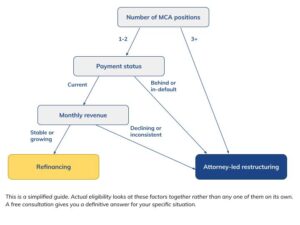
When you are dealing with burdensome MCA debt and need a solution, determining the best path forward depends on your specific circumstances. For most businesses, that’s refinancing first, then attorney-led restructuring if refinancing isn’t possible or enough on its own. The three factors below, the number of MCA positions you’re carrying, your current payment status, and your monthly revenue, point most businesses toward one path or the other.
 Number of MCA Positions
Carrying a single MCA generally leaves more refinancing options open. Multiple stacked positions can make refinancing harder to qualify for, since each additional advance adds another daily or weekly repayment competing for the same cash flow. Lenders evaluating a refinancing application look at the combined burden, not just one balance in isolation. This is often where restructuring becomes the more realistic starting point, as it addresses the existing positions directly, rather than requiring a new loan to absorb them all at once.
Payment Status
If payments are current but unsustainable, refinancing is usually worth checking first, since it’s typically the fastest and least disruptive route while the business is still in good standing with its lenders.
If a business has already fallen behind on payments or is facing legal action, a Confession of Judgment, or a UCC lien from a funder, attorney-led restructuring is typically the quicker, safer route, since legal protection is built in from day one.
Reaching out before a missed payment turns into a legal filing generally preserves more debt relief options.
Related Reading: Benefits of Attorney-Led Restructuring
Monthly Revenue
Refinancing eligibility depends in part on consistent, demonstrable revenue, since it replaces MCA debt with a single Bank Term Loan, and lenders need to see that the business can reliably support a fixed monthly payment in the future.
A business with declining or unpredictable revenue may not qualify yet, in which case restructuring keeps the business current while working out more sustainable terms.
Seasonal dips alone don’t necessarily rule out refinancing; lenders evaluate the overall trend, rather than a single month.
Why These Three Factors?
These aren’t arbitrary questions. The number of MCA positions you’re carrying, whether your payments are current, and how your revenue is trending are the same signals a specialist reviews at the start of any consultation, before delving into the specifics of your lenders, balances, or terms. Checking them first lets us quickly point you toward your best MCA debt relief option, refinancing or restructuring, rather than working through every detail before giving you a starting answer.
Get a Personalized Answer
This guide reflects the same logic our team applies during your free consultation, though every situation has details a general guide can’t capture. For a numeric estimate based on your actual balance and payments, try our MCA Debt Calculator. If you’re unsure how serious your situation is, the MCA Health Check is a quick way to assess your circumstances before you get in touch.
You don’t need to land on the exact right answer before reaching out. Working out which MCA debt relief option fits, and confirming it, is exactly what our team does every day. A specialist will walk through your specific numbers, answer anything this guide can’t anticipate, and point you toward refinancing or attorney-led restructuring with no pressure to decide on the call itself. Our team has helped more than 1,100 businesses find the right path out of MCA debt, and we’re glad to help you find yours.
FAQs
We can help you discover which path is right for you during a free, no-obligation consultation where a specialist will walk through your specific numbers and situation.
Yes. A business that doesn’t qualify for refinancing today might later, and a business currently pointed toward restructuring may find refinancing becomes possible once payments stabilize.
Some MCA relief providers offer debt settlement, which typically involves stopping payments and negotiating a reduced lump-sum payment. Our approach centers on refinancing and attorney-led restructuring instead, since both keep the business current rather than defaulting first.
We always check refinancing first, as it typically delivers the highest relief and the most straightforward path. It won’t be recommended if a business doesn’t qualify, in which case, attorney-led restructuring becomes the focus.
Related Reading: Are You Eligible to Refinance Your MCA Debt?